


In the first in a series of columns on smaller European clubs punching above their weight, Nick Harris crunches the data, studies the culture and explains the systems. Today, he considers IK Sirius’s impertinent position atop the Swedish Allsvenskan — and how their skill in the transfer market has them outpunching the biggest clubs in Sweden.
No Scotsman, no party?
That is the current fear for fans of IK Sirius — the surprise package of this season in Sweden’s top division.
By Monday August 10, Sirius had played 16 matches in the 2026 Allsvenskan, winning 13 and drawing three, to be the only team in the 12 leagues of Europe who play calendar-year seasons to remain unbeaten.
The standout performer in the team — and the league — to that point was Scottish striker Robbie Ure, 22 (below), a product of the Rangers academy, where he was attached from the age of six until 19.
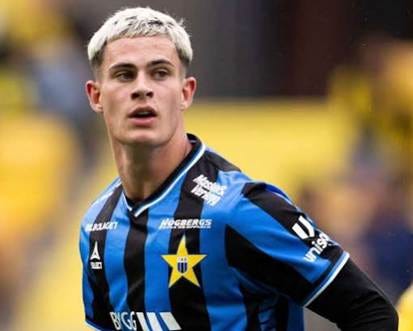
He moved from Rangers to Belgium to join Anderlecht’s reserves, playing one senior game before joining Sirius in March 2025 on a four-year deal.
He scored 11 goals in 30 league matches last year. Then — boom! — he scored 15 goals in his first 15 games this season before being sold to Sevilla in Spain for a Sirius club-record fee of €6.5million (£5.6m).
That was on August 11. At the time of his sale, Sirius had a double-digit points lead at the top of the table. Since then, they have lost three from four.
The first of those defeats was especially painful, against last season’s shock Swedish title winners Mjällby, who hail from what is effectively a village of 1500 people. Sirius were 3-0 up after 34 minutes but lost 4-3 via four second-half goals. The fans started getting restless.
Was this the first sign that with no Scotsman, there will be no Sirius title party after all? That remains to be seen.
Sirius then lost 3-0 at home to mid-table Häcken, and on Monday of last week, August 31, they lost 1-0 at home to Malmo. However, a single-goal victory at Västerås at the weekend established an eight-point gap over second-placed Hammarby.
There is still everything to play for, and still much to admire. In this first instalment of a series that hopes to highlight lessons that can be learned from smaller clubs punching above their weight in Europe, we will consider:
Sirius’s recruitment policy, which has consistently led to identifying bright young talents that can be bought low and sold (relatively) high. This is partly driven by data.
The football philosophy of the Sirius manager, Andreas Engelmark, 42, born in Pakistan and adopted by a Swedish couple, and now ploughing a successful furrow developing talent. Aged 26, he became a youth coach at Brommapojkarna, where he worked with players including Viktor Gyökeres and Dejan Kulusevski, before years in MLS with Columbus Crew before going back to Brommapojkarna, then Sirius last year.
The core principles of Engelmark’s approach, and how in practical terms he implements them.
The age profile of Sirius’s starting XIs, which are among the youngest in Sweden and indeed across top-flight teams in Europe.
We’ll consider all this with the help of Olof Lundh, a long-time friend of Sporting Intelligence who has spent decades reporting on football, at home and abroad, and is best known these days for this work on TV4.
Sirius’s recruitment policy
The recruitment policy in recent years at Sirius has attempted to focus on buying talented young players relatively cheaply, developing them as quickly as possible and selling at a profit to generate funds to do that again and again.
As Olof explains, one of the tools that Sirius uses is data product Goal Unit. Within that software is GoalUnit Fair Price, which is “a valuation model that estimates what a specific player would realistically sell for — based on performance data, club context, and financial specifics, not just transfer history.”
To stress: Sirius are a small Swedish club with a small budget and zero major trophies in their 119-year history. Sweden’s top league has traditionally been dominated by a few local giants, not least Malmö (24 top-flight titles), IFK Göteborg (18), IFK Norrköping (13), AIK (12) and Djurgårdens (12).
If we are to consider a comparison point in the Scottish Professional Football League, their average attendance of 9387 is closest to Dundee United’s (10,373) for season 2025-26 (source: transfermarkt). While the two clubs’ turnovers are also broadly similar (£11.6m to £10.5m for their last set of accounts), the efficacy of Sirius’ player trading model has allowed them to generate a profit of £2m for the year ending March 2026. Next year’s accounts is likely to be healthier still after the sale of Ure — and could also include a first league title in their history.
Considering the club’s five most profitable sales gives an idea of how their recent trading strategy has helped them.
1. Robbie Ure (Scottish striker). Bought in March 2025, age 21, for €750k from Anderlecht. Sold in August 2026 to Sevilla for €6.50m. Profit: €5.75m. This deal alone highlights how a young man rejected in Scotland was developed by an enlightened club in Sweden, who gave him his chance and then made a lot of money from him.
2. Yousef Salech (Danish forward). Bought in February 2024, age 22, for €500k from Brøndby. Sold in January 2025 to Cardiff for €4m. Profit: €3.50m.
3. Leo Walta (Finnish midfielder). Bought in March 2024, age 20, for €400k from Nordsjælland. Sold in July 2026 for €3.4m to Swansea. Profit: €3m.
4. Malcolm Jeng (Swedish defender). With Sirius since 2021, when he was 16. Sold for €2.5m to Stade Reims in 2025. Profit: €2.5m.
5. Tashreeq Matthews (South African winger). Hired in 2022, age 21, for nothing from Varbergs. Sold in 2024 to for €1.5m to Mamelodi Sundowns. Profit €1.5m.
Other players who have made Sirius profits of €1m+ in recent times include Kingsley Sarfo, Wessam Abou Ali and Jamie Roche.
The football philosophy of Andreas Engelmark
The football philosophy of Andreas Engelmark (below) centres on a clear “spelidé” (playing identity), based around a strong collective culture, player development, scenario-specific training, and an entertaining, proactive style rather than pure survival football.
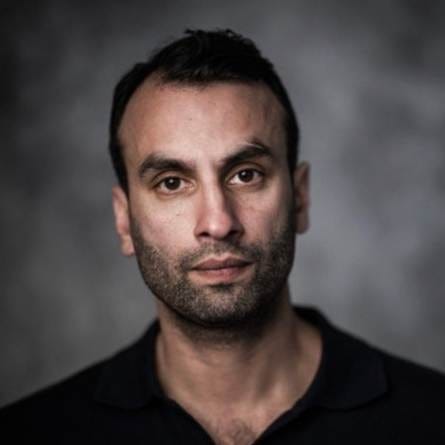
Engelmark has spoken about a “shared culture as the foundation” of success, with everyone in the squad and on the staff fully buying into the common vision and environment. He has touched upon this in a podcast with Olof Lundh, who also points out that it hasn’t all been plain sailing. As recently as a year ago, Sirius were struggling near the bottom of the table and Engelmark’s job was briefly under threat.
But his methods paid dividends and he retains the view that if any player doesn’t buy into his ideas then “they don’t need to be here”.
Results are necessarily important but Engelmark wants Sirius to be entertaining as a matter of course, and focuses on that above survival.
Sirius’s youthful age profile
IK Sirius’s starting line-ups this season (Allsvenskan 2026) have typically had an average age of around 24, making them one of the youngest sides in the league. Starting XIs have variously been aged 23.4, 23.5, 23.8, 23.9 (multiple times), 24 (multiple times), 24.1, 24.2, 24.3 (multiple times), 24.4, and maxing out at 24.6.
The one other side with a clear age profile younger that Sirius is Engelmark’s former club, Brommapojkarna (aka BP, at circa 23.3). The Allsvenskan overall squad average age is around 25.2 years.
Engelmark’s practical application
Player development is a constant for Engelmark, rooted in his long background as a youth and academy coach at BP. He focuses on technical details, not least positioning and finishing in the box, as well as mental conditioning.
He advocates “purposeful training” in “play-to-win” sessions that aim to rehearse upcoming match scenarios at high intensity.
He also talks about “principles over systems”, not least consistent patterns of movement, positioning and collective behaviour that remain consistent even as the squad, by its nature, evolves all the time.
He has used 4-2-3-1 and an attacking 4-3-3, and analysis of Sirius under him shows dynamic, high-intensity play with quick transitions.
Tactical continuity is key, based on free-flowing attacks; on “system longevity” that can endure via heavy squad rotation; and on a controlled backline, anchored by captain Henrik Castegren and Tobias Anker, allowing a young offence to push forward.
Success? It’s academic
Olof Lundh says: “There are similarities between Mjällby and Sirius but also big differences. Sirius develops players and there is now continuity in this.
“They were away (from the top division) for more than 40 years before getting back to Allsvenskan in 2017 and are now in their 10th season.”
Olof highlights the scouting and data work that Sirius applies in countries across Europe, not least Scandinavia, citing Leo Walta’s acquisition as a prime example — hired from Nordsjælland in Denmark for €400k before being sold to Swansea for €3.4m this year. Olof was not surprised that Sirius sold Robbie Ure, because it was “a price that could be re-invested”.
As for Sirius’s medium and long-term future, Olof describes Uppsala as primarily a city (Sweden’s fourth largest, with a population of around 170,000) known for its educational establishments, especially Uppsala University, founded in 1477. The university is inherent to Uppsala’s culture, and the city does not have sport ingrained in it. While the club’s growing fanbase has been thrilled by this season as unlikely events have unfolded at the stadium Studenternas IP, Olof thinks it’s probably good that the football club can be left to do its own thing and develop in its own way.
And, maybe even win a title this season, Scotsman or not.

Nutmeg Issue 41 is out now. Click on the cover image to buy or…

Sirius’s wobble after selling Robbie Ure highlights a flaw in the Tony Bloom approach: it protects the balance sheet, but caps the sporting ceiling.
* Output Lag: Finding undervalued talent and flipping them for profit makes financial sense, but liquidating your primary goalscorer mid-season injects immediate volatility. You can’t assume an incoming replacement will replicate that production on day one, regardless of what the underlying numbers say.
* The System Trap: The model assumes players are interchangeable parts in an algorithm. In reality, tactical chemistry takes time, and frequent roster turnover—especially paired with eventual managerial churn—means every campaign starts as a reset.
* The Silverware Question: This strategy guarantees solvency and keeps a club punching above its weight, but it turns the team into a perpetual incubator.
Financial health is necessary, but if the mechanism forces you to sell your best assets the moment you have a shot at winning the league, what’s the ultimate objective? At some point, you have to prioritize trophies over another profitable transfer cycle.