

By Stephen McGowan
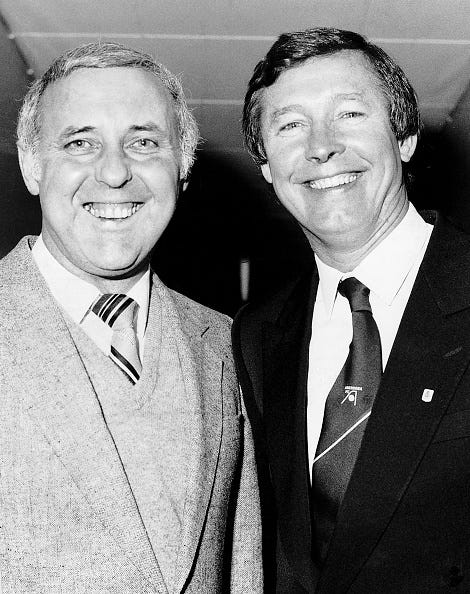
“The one thing that has annoyed me all my life is this acceptance that Rangers and Celtic must win, that everything is geared around them, that nobody but nobody is expected to beat them.”
Sir Alex Ferguson, Aberdeen matchday programme, September 2 1978
Tony Bloom is not the first to use data to level the playing field with Celtic and Rangers. Closing in on their one-and-only league title in 1983, Dundee United had no cutting-edge analytics to call upon. Only a friend of manager Jim McLean, perched high in the Tannadice stand with a pen and paper.
“Dougie Houston used to play with Wee Jim at Dundee,” recalls former United defender Maurice Malpas. “And he came to every home game and did stats for the strikers and defenders.
“It would be a bit of paper and notes on how many times the strikers linked up or how many times they gave it away or kept it, or had an attempt on goal.
“With Eamonn Bannon and Ralph Milne, it was the number of crosses they got into the box. For full-backs like me, it was the number of crosses I let into the box. You would get a couple and Wee Jim would rip the backside out of you. ‘That’s too many crosses, son.’
“So that was the start of stats in football. Dougie did his data with a pen in his hand and there was nothing hugely technical about it. Get the ball in the box and try to score a goal. Stop the ball coming into the box to stop Celtic, Rangers or whoever from scoring. It was basic stuff, but football has always been a simple game complicated by idiots.”
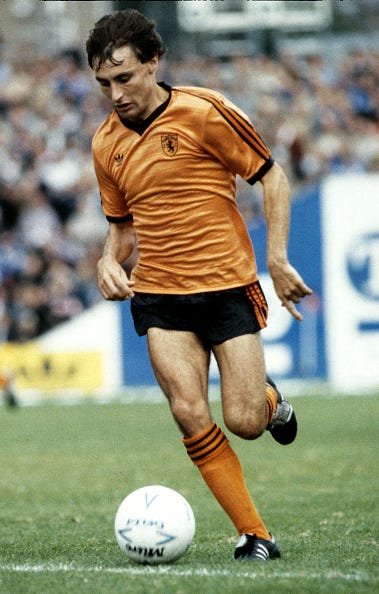
For Scotland’s provincial clubs, simplifying the task of beating Celtic and Rangers to a league title has been devilishly difficult. A mission which has vexed minds, big and small, since Dumbarton faced Rangers in a play-off to decide the destination of the first-ever Scottish league title in May 1891. Playing out a 2-2 draw at Glasgow’s Cathkin Park, the clubs shook hands and agreed to share the trophy.
The Scottish league title has been contested 130 times in total, pausing for World War Two. In 110 of those years, the trophy has been won by either Rangers or Celtic. The other 19 titles were hoovered up by Aberdeen (4), Heart of Midlothian (4), Hibernian (4), Dumbarton (2), Dundee United (1), Motherwell (1), Kilmarnock (1), Dundee (1) and the now defunct Third Lanark. The winner of season 2025/26 will be determined in a matter of weeks.
The statistics show that Celtic or Rangers should win because they usually do. Should Hearts cling on to win for only the fifth time in their history, the significance of the achievement can be gauged by the fact that that just 14% of the leagues contested have been won by teams outwith the Old Firm. Breaking the big two requires a level of skill, guile, mental strength, cunning and excellence. Or, as Brighton owner and Tynecastle investor Bloom hopes to prove, targeted, pinpoint data.
Recalling the last winner from outside Glasgow requires a long memory. Many of the fans who now follow Scottish clubs were not born in 1985 when Willie Miller’s headed goal in a 1-1 draw with Celtic at Pittodrie secured a third title in six seasons for Alex Ferguson’s Aberdeen. Those were different, more equitable, times.
Player wages were broadly similar across the board, while phrases like ‘Champions League windfall’ and ‘multi-club ownership’ had yet to enter the vocabulary. Prior to the Bosman ruling in 1995, clubs like Dundee United could tie their best players to eight-year contracts in order to prevent them going elsewhere.
Get 12 months of access to every post on Nutmeg FC PLUS a year’s subscription to the beautiful, 200-page print quarterly — delivered straight to your door.
Monthly digital-only subscription also available.
It always helps when Celtic and Rangers are in the throes of a periodic meltdown. When Aberdeen claimed three titles in five years, the ‘biscuit tin’ mentality of Celtic’s old ruling families contributed to a lack of ambition and investment, and a malaise around Parkhead. Under manager John Greig, meanwhile, Rangers finished a distant fifth in the Scottish Premier League the day Ferguson’s Aberdeen battered Hibernian 5-0 at Easter Road in May 1980 to win their first title in 25 years.
A squad of strong, resilient characters led by an indomitable manager conjured up a perfect storm neither Celtic or Rangers could cope with until Graeme Souness pitched up at Ibrox and changed the rules of engagement.
“It was all down to belief,” recalls Dons legend John McMaster now. “And it came from the manager.
“Big Billy McNeill was at Aberdeen for a year and he installed a bit of that in us. An attitude of ‘We have to beat them if we’re going to win the league.’
“Fergie followed him and pushed it in our faces every f****** week. He constantly told us that there was no use beating the other teams if we couldn’t beat Celtic and Rangers. And, by God, we did.”
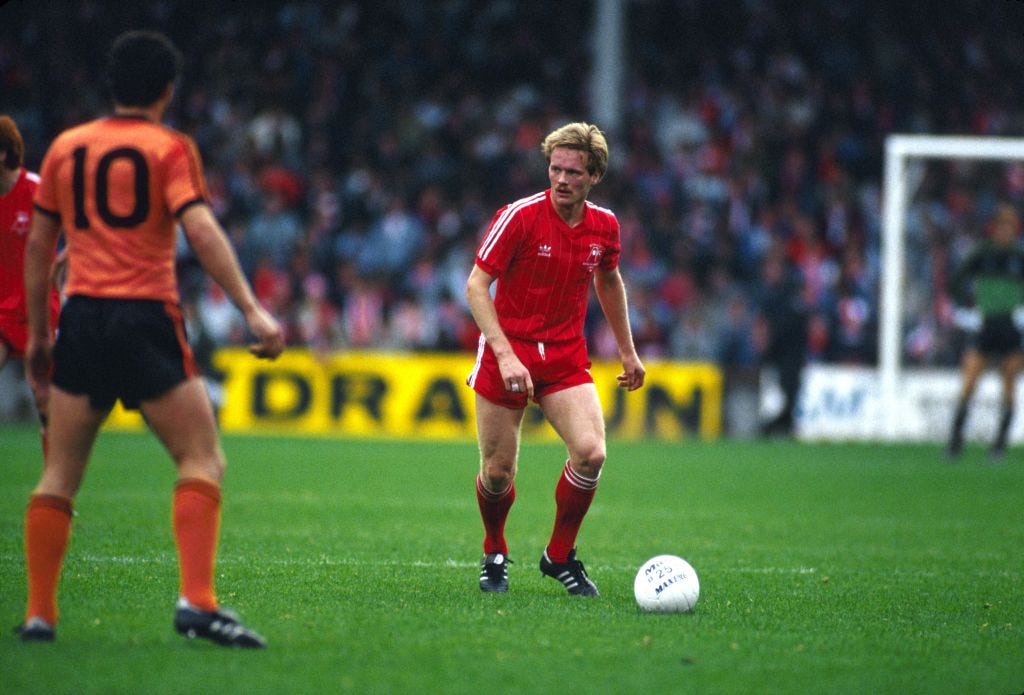
In April 1980, Aberdeen travelled to Celtic Park and won twice in a fortnight. Watch the old Scotsport highlights of those games on YouTube and the noise is pierced by fans in the Parkhead Jungle chanting “Fergie, Fergie, shut your mouth.”
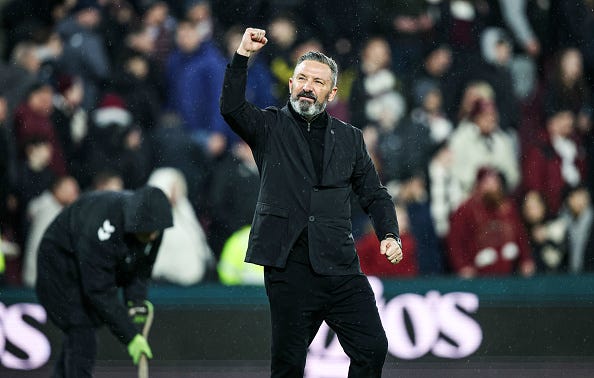
One by one the mental barriers were being pushed, probed and dismantled, and when McMaster surveys the current Hearts team, he sees the signs of a manager learning from the master. Ferguson has recently offered help and advice to Tynecastle boss Derek McInnes on how to go about detonating the deference and the fear surrounding the Old Firm. In six meetings with Celtic and Rangers this season, the Edinburgh team have lost only once.
“At Aberdeen, we believed that we had a better team than those two,” says McMaster. “We had better players. And I see Derek McInnes drum the same message into Hearts.
“Hearts have beaten Celtic and Rangers repeatedly this season, the two of them know they’re in a game these days. Derek has found a way to get that into the players, that they can compete.
“Fergie would say to us, ‘Don’t turn your back on a Celtic or Rangers player. They’ll kill you.’ We were on a crash course to become winners. And when we won that league, we didn’t just win it, we hammered Hibs 5-0 at Easter Road. And Fergie came on the pitch at the end leaping around like a loony.
“It was the first time we’d won the league since 1955, the first time any team outside Celtic or Rangers had won it since Kilmarnock in 1965. It changed everything.”
At Tannadice Park, an hour or so south of Aberdeen, Ferguson’s greatest adversary scribbled down notes. Dundee United’s McLean was described, at turns, as a bully, a bampot and a visionary genius. United fan and screenwriter Neil Forsyth once described him as a “coiled spring of hunger and anger and determination, who rose in the morning wounded and seeking revenge”.
Far from getting his players on side, it felt as if McLean was pushing them away. Pushing and pressing buttons in the hope of provoking a reaction.
“Wee Jim wanted us to say, ‘I’ll show you’ and it often worked,” recalls captain Paul Hegarty. “Maybe if he’d said to us, ‘You’re doing well lads’ we’d have taken our feet off the gas. We never really found that out.”
United had learned how to win in the League Cup tournaments of 1979 and 1980. Then they pipped Celtic and Aberdeen to the title on the final day of season 1982/83.
“Wee Jim wasn’t stupid,” says Malpas. “He made it him against us.
“After a bad game we looked out for each other because we knew we were going to get pelters. It wasn’t us against the world, it was us against the manager.
“We had players who could make us a hard team to beat, and had players — myself included — who were eight out of tens every week. Then we had players like Paul Sturrock and Ralph Milne and Eamonn Bannon who could be unplayable on their day.”
Winger Bannon barely spoke to his manager for four years, telling the Guardian: “Managers now pat you on the back and give you cuddles. He was the exact opposite. After games when he came in bawling and shouting, it just turned into white noise. You switched off.”
After a 6-4 aggregate win over Monaco in the UEFA Cup, McLean famously fined his players for failing to entertain the fans enough. Players seeking an escape route invariably found that the terms of their lengthy contract bound them to the radiator like a hostage in handcuffs.
“In our day you didn’t leave because you couldn’t,” admits Hegarty. “The only way you could leave was a big transfer fee or if you were freed.
“Aberdeen players didn’t leave because there was no Bosman ruling so Alex Ferguson and Jim McLean made sure they had a solid core, then added two or three better players every summer. There were none of the huge rebuilds you see now with 13 or 14 players coming in.
“The players we had were together for a while, together with the manager, acquiring familiarity and self-belief. All of these things combined to make a title-winning team.
“I had a chance to go to Spurs, Dave Narey had a chance to go to any club you care to mention. Paul Sturrock had a chance to go to West Ham for big money.
“Ask those players if they would change anything and they might say, ‘The money.’ But I arrived at Dundee United in 1974 and the players I worked with all those years became like brothers to me.
“We still keep in touch, you know them and trust them inside out and when Wee Jim gave us a rollicking at half-time we put an arm round each other and said, ‘You’re doing okay, forget that.’”
There was no discussion of winning the league until they actually did it. After leading the SPFL Premiership for five months Hegarty — born in Edinburgh and once a player with Tynecastle Boys’ Club — suspects Hearts are under more pressure now than Dundee United ever were.
“We flew under the radar for a big part of the season. We just played our game and stayed there or thereabouts in third or fourth position until we started to think, ‘Here we go, we’ve a chance here.’”
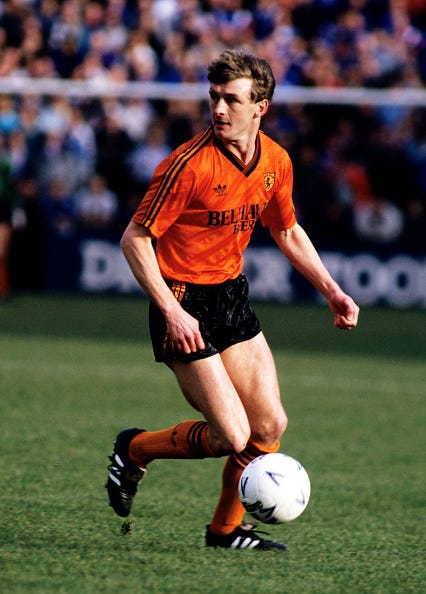
On April 20 1983, United travelled to Celtic Park and won 3-2. They secured their first-ever Premier Division victory at Parkhead with ten men after Richard Gough was sent off.
Hegarty opened the scoring, the teams exchanging blows until the late Ralph Milne secured the winner with six minutes to play. Now 71 and residing in Monifeith, where he has lived for 52 years, Hegarty keeps one eye on his grandchildren as he rhymes off the final games of that season in short order, complete with scorelines.
“We beat Kilmarnock, Morton and Motherwell, all 4-0 wins against strong teams.
“For the first 25 minutes against Motherwell, it was a real nervy affair and we looked edgy until Eamonn Bannon produced once of his magnificent free-kicks from 25 yards into the postage-stamp corner. That settled our nerves and we sealed the league with the final win against Dundee at Dens.
“That day showed what you need most to beat Celtic and Rangers to the league. A solid nerve.”
Part two tomorrow: Hearts have been the nearly men of the Scottish league for 60 years. Thanks to Tony Bloom, breaking the Old Firm finally looks more likely than ever…