

By Brian Marjoribanks
Tynecastle Park has a particular sound when those crammed into it hold their collective breath amid a moment of high drama. It’s not quite silence. More like a shared intake of air, a collective pause as over 20,000 lives briefly align.
On Saturday, January 17, I stood inside that glorious Edinburgh footballing cathedral sharing that precise experience with two of my three sons, Alexander (16) and Fraser (13), as Hearts and Falkirk faced each other in a tense Scottish Cup tie that was clinched by a penalty shoot-out (the 8pm kickoff meant eight-year-old James was too young to attend).
When Bairns striker Ben Parkinson successfully dispatched the decisive kick high down the centre, my boys leapt into the air, eyes wide with glee and disbelief as back pages across the land were hastily rewritten.


Poignantly, at the same venue 65 years earlier, my father Brian Marjoribanks Snr had set in motion events that would eventually make front-page news and altered the course of our family’s destiny.
In September 1961, aged just 19, Dad scored on his debut for Hibs in an Edinburgh derby. He would become (he always said) only the third player ever to cross the capital divide when he later signed for Hearts.
However, he surprised the football world in 1964 by announcing he was quitting the game to pursue a career in his first love: drama.
When the papers covering the story hit the newsstands, BBC Radio’s Today programme invited Dad on and asked him to recite Shakespeare. The slot had not been billed as an audition, but that afternoon he received a phone call asking if he fancied a starring role in Dr Finlay’s Casebook, the top TV drama of the time with each episode watched by an audience of 12 million.
Then, after a spell starring alongside Jimmy Logan at the Glasgow Metropole, Dad accepted his most famous role as a television and radio sports presenter with BBC Scotland.
He became a household name on the small screen over 18 years with the Beeb before taking on a high-powered role with broadcasting regulator the ITC (now Ofcom), then serving in his retirement as an international juror at the Prix Italia Television Festival in both Sicily and Venice.
But it was his goal at Tynecastle in 1961 that proved the catalyst for his remarkable career and there’s no question he influenced my own choice of work as a national newspaper sportswriter.
This article is free, but most of our content is paid. Don’t miss out… get a Nutmeg season ticket. Sign up and get 12 months of access PLUS a year’s subscription to the beautiful, 200-page print quarterly — delivered straight to your door.
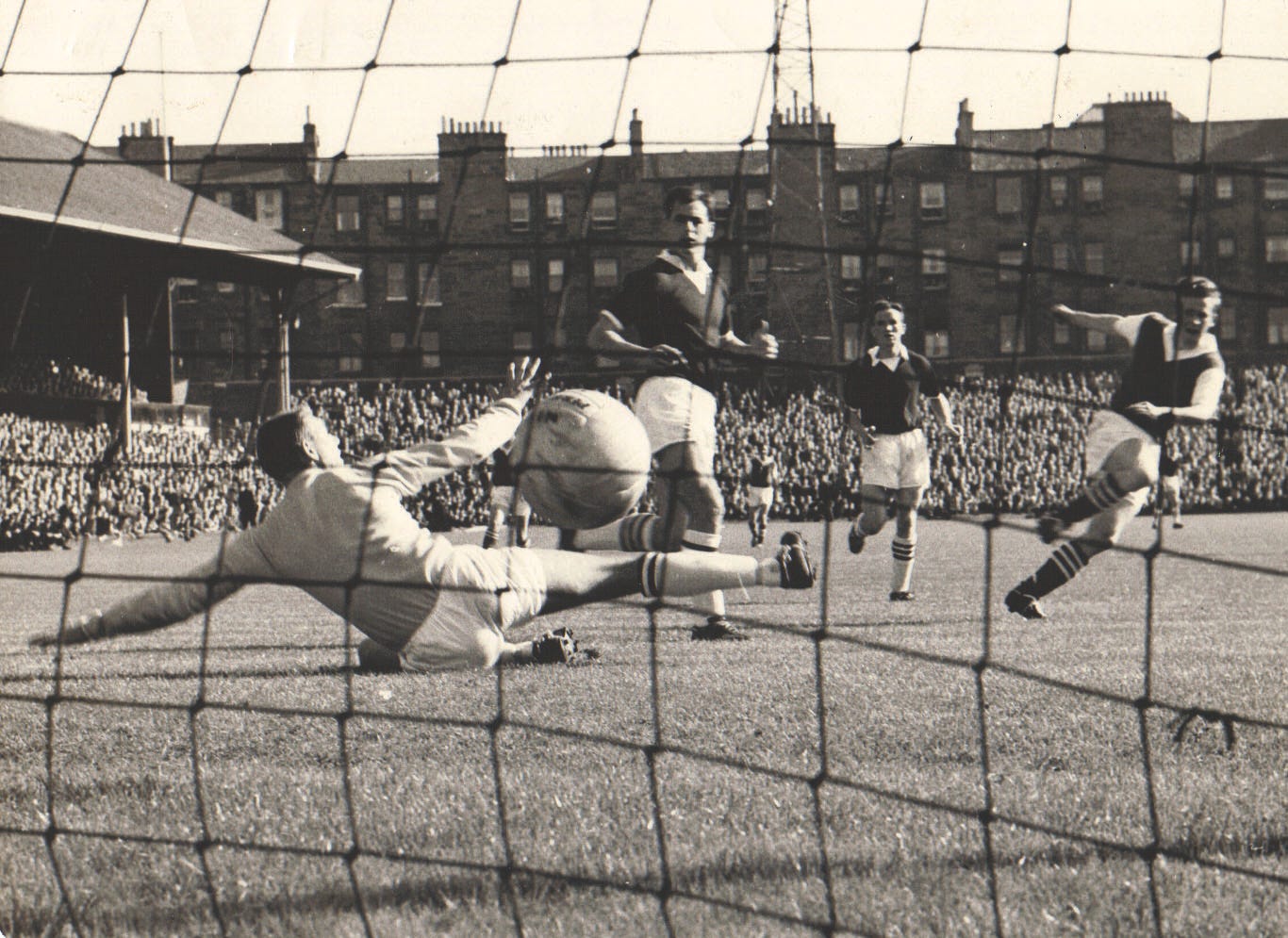
With my family’s special history with Tynecastle, allied to its tight pitch and incredible atmosphere, it’s no surprise that the Gorgie ground was my favourite sporting venue in Scotland while writing about the beautiful game. Fittingly, it was the stadium I last reported from (Hearts 3 Dundee 2; the Jam Tarts were down 2-0 at half-time) before I was made redundant out of the blue the following morning.
Yet when time was called on my 20 years as a national sportswriter in January 2024 the timing could not have been better. Falkirk were finally getting good again after a long spell in the footballing wilderness. With the benefit of the extra time I now had on my hands as I waited to start my teaching postgraduate at the University of Glasgow, Dad and I returned to watching the Bairns together just as we had during our golden years under Jim Jefferies in the 1990s as we marvelled at Simon Stainrod’s sorcery with a football.


During this time, Dad began to revisit tales he had first told me as a child. As a teenage Queen’s Park player, he had been given a complimentary ticket to the 1960 European Cup final between Real Madrid and Eintracht Frankfurt, and he had always stated that he had instead chosen to take a girl on a date. Now he told me the real story. He did not have the money to pay for the trip to Glasgow and he regretted not having been at Hampden Park to witness Madrid beating Frankfurt 7-3 in one of the greatest European finals of all time.
His own father, John Marjoribanks, had died when Dad was just 13 and he grew up without the privileges his extraordinary life has afforded me and had to make his way in the world without a father of his own.
Each time we drove past Quarry Park in Brightons, Falkirk, Dad would remind me he once scored nine goals in a single match there. Now he told me the part he always omitted: when he scored his ninth goal, he ripped open his right boot. Without the money for a new pair, he feared his promising career may be over before it had really begun.
One of the pictures of Dad I love the most is where he is being marked in a game by Celtic’s 1967 European Cup-winning captain Billy McNeill. Smiling mischievously, Dad reminded me that he had let me believe he had scored in that match until I was 16 years old, when he admitted it was actually a teammate who had found the net.
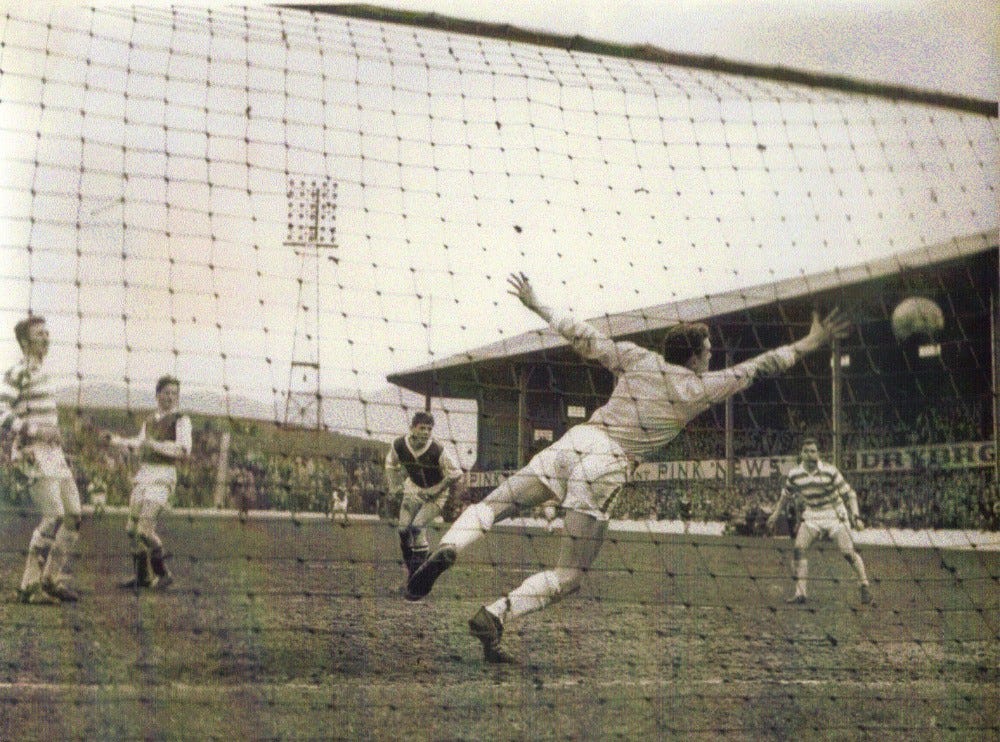
I will always cherish those months and matches with Dad but I would have asked even more questions had I known what lay just around the corner. In August 2024, I received a phone call telling me Dad had suddenly and unexpectedly suffered a stroke at his villa in Menorca. My brother Graham and sisters Katie and Jenny and I were on the next flight to Majorca to join our Mum Kathleen at Dad’s bedside in the Son Espases Hospital in Palma where two days later, on the morning of August 9 2024, he passed away.
The grief remains raw but fond memories of a life lived to the fullest help soothe the pain. Dad had an incredibly rich, varied and successful career on the football field, in the theatre and on television. But the roles he cherished most in his life were devoted husband, adoring father and doting grandfather.
So I made a promise to myself that I would take his grandchildren to Tynecastle for a real-life history lesson, to the place where our family story was shaped because of Dad’s talent and hard work, traits that ensured he made the most of every opportunity that came his way; the perfect lesson for any father to pass down to his child.
So there we were: Alexander, Fraser, my wife Jennifer and I, walking down Gorgie Road last weekend on our footballing pilgrimage to see an impressive Falkirk team taking on a Hearts side proudly on top of the Scottish Premiership.
As the boys hugged, danced and sang in the Roseburn Stand at the game’s thrilling spot-kick denouement, it suddenly felt bittersweet because Dad was not there to share the moment. But then a thought struck me. Falkirk had won and my sons were as captivated as I had been when Dad first took me to Brockville to see Falkirk win promotion to the Premier Division in 1986. I realised I was standing right in the middle of the past and the present.
Dad had once strode out onto that Tynecastle pitch unsure where his future would lead. I now stood in the same stadium, still figuring out 17 months later how to live without my biggest supporter, my biggest critic, my biggest inspiration, my hero. My extraordinary Dad.
I’m still coming to terms with the fact that the final curtain has come down on his remarkable story that took flight that day at Tynecastle Park in 1961. Yet as I walked out into Edinburgh’s chilly January air, I smiled as I looked by my side to my boys who are ready to begin our family’s next act.
Next month, Alexander and Fraser will tread the boards at Grangemouth Town Hall, performing with Falkirk’s gifted Big Bad Wolf Theatre Company. The boys inherit their Granpa’s passion for drama first, football second, as well as his talent, work ethic, his unshakeable self-belief and his courage to try and live a life less ordinary.
Just like Dad striding out onto the Tynecastle turf all those years ago, their scripts are as yet unwritten. With their incredible Grandpa as their inspiration, all the world is their stage.
Lovely piece Brian. I remember your dad with great affection-he was very supportive and encouraging of me in my very early days at the BBC. A lovely man. Hope all is well with you.
I remember Brian Snr on TV well. Great to read his full back story 👏👏